Feasibility assessment
Source characterisation, feedstock availability and reactivity, indicative capture potential, energy demand and a first-pass cost per tonne.
Berzen applies its engineering, digitalisation and industrial scale-up capabilities to emerging Net-Zero technologies — building modular system concepts, monitoring architectures and commercialisation pathways that can be replicated across industrial sectors.
The principle
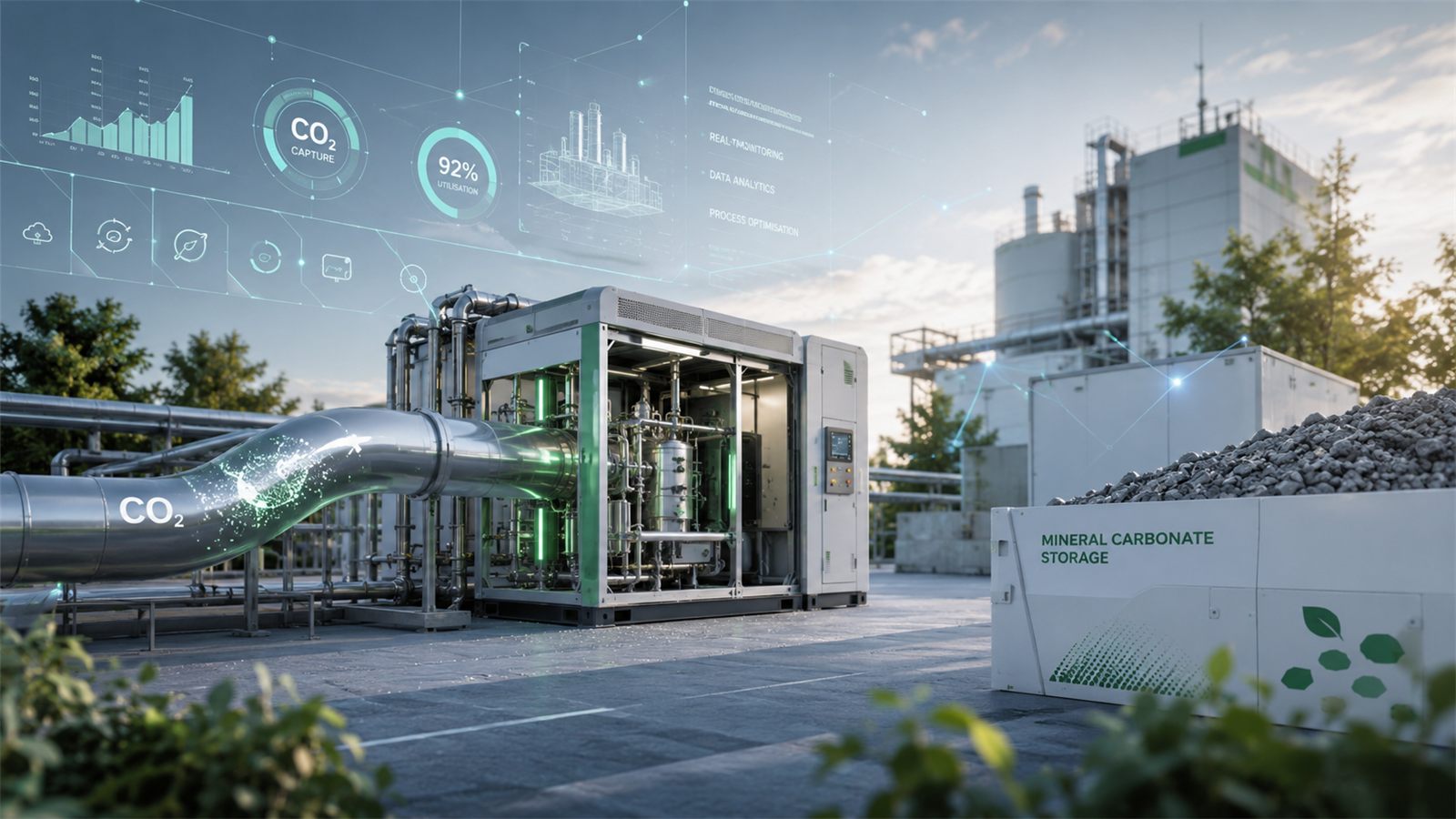
Mineral carbonation reacts CO₂ with calcium- and magnesium-rich materials to form stable carbonates. The carbon is then locked in solid form — permanent by chemistry, not by containment.
The materials needed are often already on site or nearby: steel slags, fly and bottom ashes, cement kiln dust, concrete fines, mine tailings and other alkaline industrial residues. That converts two problems — an emission stream and a waste stream — into a single process with a usable output.
Process chain
Each stage is engineered as a module — so the configuration adapts to the source rather than the site adapting to the technology.
CO₂ separated from the flue or process gas stream, with the route selected against concentration, flow, temperature and available heat.
Alkaline feedstock prepared — sizing, activation and dosing matched to reactivity and available residue volumes.
Carbonation under controlled conditions, with process parameters held at the point where conversion and energy use are balanced.
Mass balance, product characterisation and continuous instrumentation produce an auditable record of what was captured and stored.
Our contribution
We are the engineering, digital and commercialisation capability around the technology — working with technology owners, plant operators, research partners and investors.
Source characterisation, feedstock availability and reactivity, indicative capture potential, energy demand and a first-pass cost per tonne.
Process routes, mass and energy balances, equipment sizing envelope, utilities and integration constraints on the host site.
Skid and container-scale designs that can be duplicated across sites, shortening permitting, fabrication and commissioning timelines.
Instrumentation plan, edge computing and data pipelines that keep the process controlled and the evidence continuous.
Measurement, reporting and verification designed so that captured and stored tonnes stand up to third-party scrutiny.
Manufacturability, investment requirement, partnership models and the replication strategy that takes one installation to many.
Measurement first
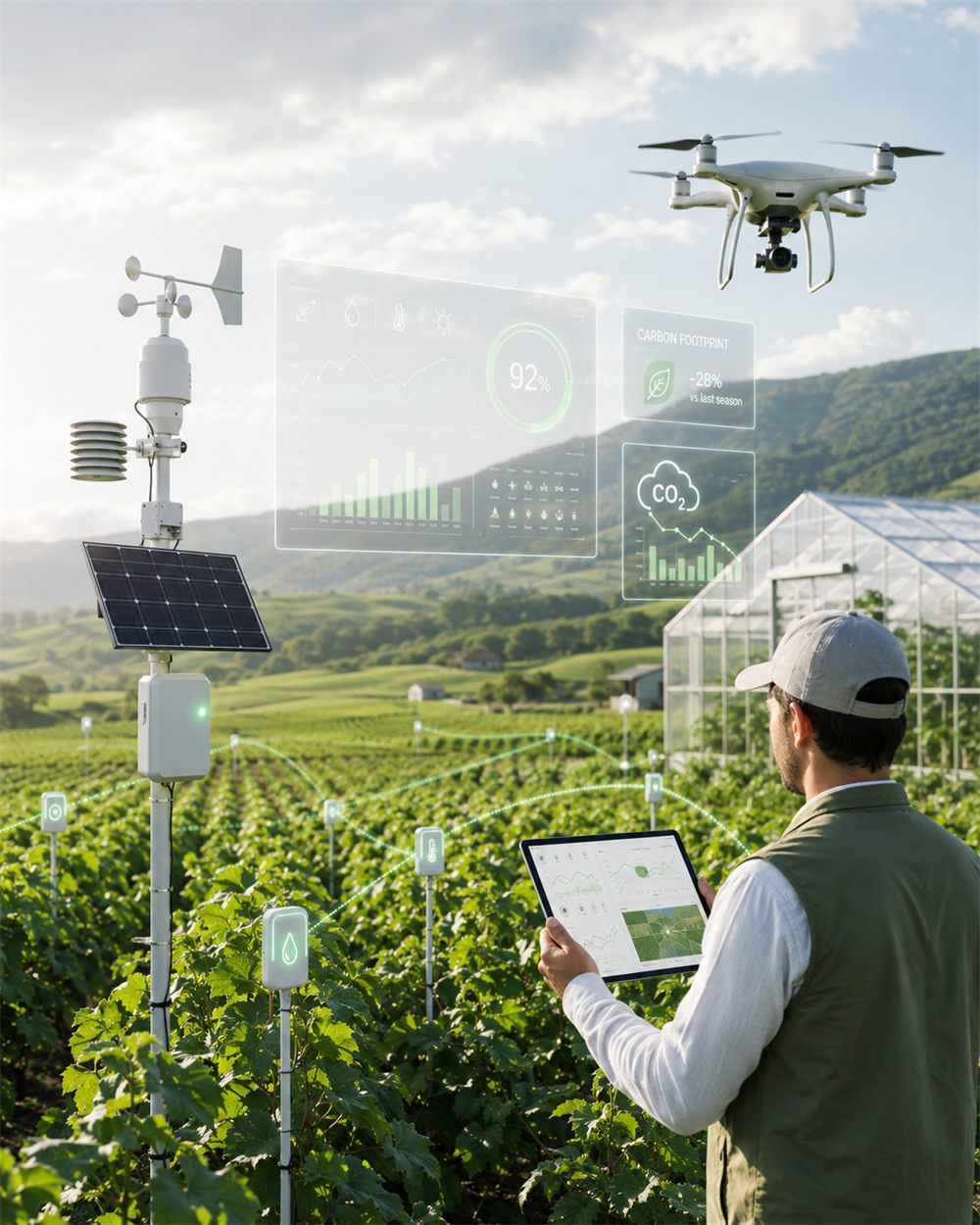
Reporting frameworks are converging on continuous, auditable data. Systems designed today without that layer will be retrofitted expensively tomorrow.

Independent evidence
A carbon or environmental claim carries more weight when two independent measurement systems agree. Berzen pairs plant instrumentation with Earth observation data so that each checks the other.
In-situ sensors give precision at a point and can be calibrated, but they can also drift, fail or be disputed. Satellite observation gives continuous, independently archived coverage of the whole site and its surroundings, acquired by an operator with no stake in the result. Where the two agree, the record is considerably harder to challenge.
Who we work with
Assess your site
Send us your gas composition, flow and nearby residue streams. A short feasibility screen will show whether the chemistry, the volumes and the economics line up.